Table of Contents
- Table of Contents
- Coffee Degassing Valve: The Short Decision
- What Does a One-Way Valve Do?
- Gas Release Is Different From Oxygen Barrier
- Which Coffee and Filling Conditions Change the Decision?
- Whole Bean Versus Ground Coffee
- Roast-to-Fill Timing, Headspace, and Packing Method
- Decision Table: Valve Need and Validation Questions
- How to Specify the Valve Within a Coffee Bag Format
- How to Validate a Filled Coffee Pack in Four Steps
- Frequently Asked Questions
- Conclusion: Specify the Valve as Part of the Whole Pack
- Discuss Your Packaging Specification With QINPACK
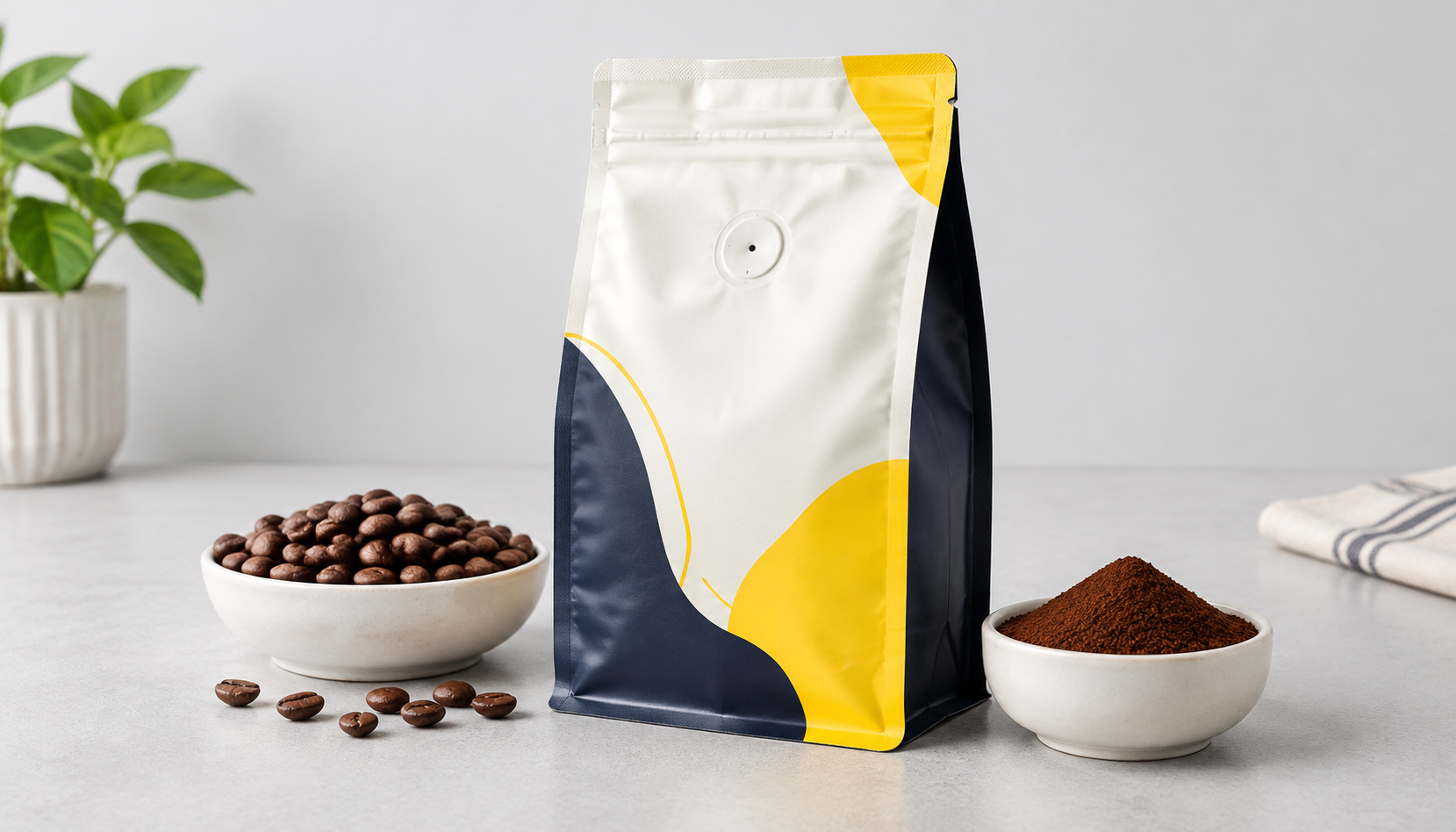
A coffee degassing valve can help manage carbon dioxide released by freshly roasted coffee after filling, but it is not automatically required for every coffee pouch. The decision depends on the coffee form, roast-to-fill timing, headspace, packing method, package barrier and the results of a filled-pack trial.
Table of Contents
Coffee Degassing Valve: The Short Decision
A roasted coffee pack is a candidate for a coffee degassing valve when the product is expected to release enough carbon dioxide after filling that pressure, pack distortion, seal stress or handling performance could become a concern. A valve is less likely to be necessary when coffee is packed after substantial gas release, the residual gas load is low, or the chosen pack and filling process have already been validated without one.
Do not make the decision from coffee form alone. Whole bean coffee often releases gas over a longer period, but some ground coffee can also require pressure management depending on roast profile, grind, packing delay and headspace. The practical decision is to compare a valve-equipped pack with a suitable control pack under the actual filling and storage conditions.
Key takeaways:
- A one-way valve is a gas-management feature, not a substitute for an oxygen-barrier laminate.
- Roast-to-fill timing and the amount of gas remaining at filling can matter more than the label whole bean or ground.
- Flat-bottom and side-gusset construction describe the bag geometry; the valve is a separate component and specification.
- Confirm valve placement, installation integrity, seal performance, aroma protection and filled-pack behavior before approving production.
What Does a One-Way Valve Do?
- One-way coffee valve
- A small pressure-responsive component installed in the coffee pack that is designed to allow gas to move outward under specified conditions while limiting inward air movement. The exact construction, opening behavior, placement and compatibility must be confirmed for the selected valve and pouch.
During roasting, coffee develops carbon dioxide. After roasting, the rate and duration of release vary with the coffee and process. If a sealed pouch is filled while gas release is still significant, the internal pressure can change as the pack travels through storage and distribution. A valve may provide a controlled route for some of that gas to leave without opening the package.
This does not mean that a valve removes all gas, preserves every aroma compound or guarantees a particular shelf life. Its performance depends on the valve, the film construction, the seal design, the coffee condition and the surrounding storage environment. A valve also does not correct a weak seal, punctured laminate or poor installation.
QINPACK presents a degassing valve coffee pouch option for projects that require this feature. Treat the product page as a starting point for specification discussion, then confirm the valve model, pouch construction, installation process and project-specific suitability with the factory.
Gas Release Is Different From Oxygen Barrier
A valve and a barrier laminate solve different packaging problems. The valve concerns pressure and gas movement after filling. The laminate concerns how readily oxygen and moisture permeate through the film over time. OTR, or oxygen transmission rate, describes the amount of oxygen passing through a specified area of material under stated test conditions. Any OTR or moisture result should be reviewed with its temperature, relative humidity, film area, thickness and unit.
A coffee pouch barrier can help protect aroma and product quality, but the required construction depends on the coffee, target shelf life, storage conditions, distribution exposure and package design. A valve does not turn an unsuitable film into a suitable barrier. It also does not replace sound heat seals, adequate puncture resistance or appropriate gas flushing.
Gas flushing may reduce oxygen in the pack at the time of filling, while a valve manages a different condition: gas released by the coffee after filling. The two features may be considered together, but neither should be assumed to eliminate the need for the other. Confirm the complete laminate, closure, valve, filling sequence and seal settings as one system.
Which Coffee and Filling Conditions Change the Decision?
The valve decision changes when the quantity and timing of residual gas change. Review the coffee form, roast profile, degassing history, grinding point, time between roasting and packing, package headspace, filling speed, gas-flushing process, storage temperature and distribution handling. These factors describe the actual application more accurately than a generic rule such as all whole bean coffee needs a valve.
For a new SKU, record the intended roast-to-fill schedule and run a small comparison using the proposed pouch with and without a valve where practical. Observe pack appearance and closure behavior over the planned handling period, then assess the coffee and package against the brand’s quality requirements. A packaging supplier can help define the construction and test plan, but the roaster or brand remains responsible for confirming product-specific acceptance criteria.
Whole Bean Versus Ground Coffee
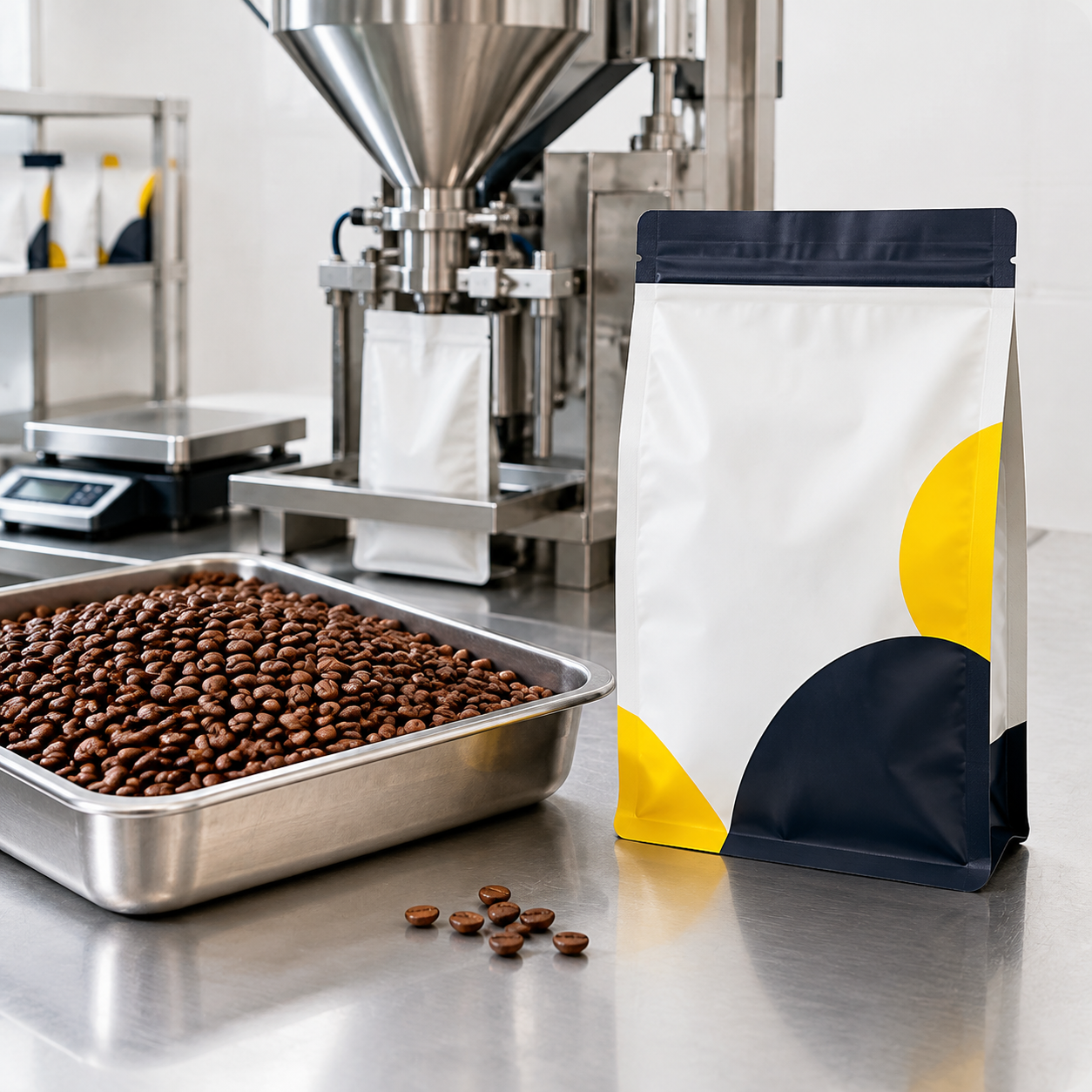
Whole bean coffee often presents a continuing degassing consideration because the beans can retain and release gas after packing. That does not establish a universal valve requirement. Roast degree, bean structure, cooling, storage before filling and the quantity packed all affect the result.
Ground coffee can also need a valve. Grinding changes the product’s physical condition and may change gas release behavior, but the result still depends on roast-to-fill timing, grind characteristics, packing process and headspace. A claim that ground coffee never needs a valve is too broad for procurement decisions.
For whole bean coffee packaging, compare the pack shortly after the intended filling time and after the normal distribution interval. For ground coffee packaging, also consider how quickly the product is ground and packed, whether the process uses gas flushing, and how the smaller particles affect filling consistency and seal contamination risk. In both cases, specify acceptance criteria before selecting the component.
Roast-to-Fill Timing, Headspace, and Packing Method
Coffee roast-to-fill timing should be treated as a packaging input. Packing soon after roasting may leave more residual gas to manage inside the pouch. Packing after a defined rest period may reduce the immediate pressure concern, but the appropriate interval is product- and process-specific. There is no universal degassing period that can be applied to every roast, grind and pack size.
Headspace also matters. The free volume above the coffee, the fill weight, the pouch dimensions and the way the pack is handled can affect internal pressure and visual distortion. A larger headspace is not automatically a solution, and a smaller headspace is not automatically a problem. Measure or control the variables that are important to the filling line and the finished-pack specification.
Finally, document whether the pack is filled by a manual process, auger or volumetric equipment, premade pouch line or another system. Check whether nitrogen flushing is used, how the top seal is formed, and whether the valve location is compatible with the filling and sealing equipment. The valve choice should fit the operating process, not only the printed bag artwork.
Decision Table: Valve Need and Validation Questions
Use this table to frame the first packaging discussion. The outcome is a validation priority, not a universal specification.
| Project condition | Initial valve consideration | Questions to validate |
|---|---|---|
| Freshly roasted whole bean packed on a short schedule | Valve may be a strong candidate if pressure changes affect pack shape or handling. | How much time passes from roast to fill? How does the filled pouch behave during storage and transport? |
| Whole bean packed after a controlled rest period | Valve need may be lower, but should be confirmed with the actual roast and fill sequence. | Does the pack remain stable through the intended distribution period? Is aroma protection still adequate? |
| Ground coffee packed soon after grinding | Do not exclude a valve. Consider gas release, headspace, filling speed and seal contamination risk together. | What is the grinding-to-fill interval? Is flushing used? Are seals consistently clean and strong? |
| Longer storage or variable distribution temperatures | Prioritize a complete pack trial because pressure and barrier performance may change with conditions. | Which temperatures, humidity levels and handling events represent the intended route? |
| Pack already shows distortion, leaking or seal stress | A valve alone is not the corrective action. | Is the root cause the laminate, seal setting, contamination, filling process, closure or mechanical damage? |
How to Specify the Valve Within a Coffee Bag Format
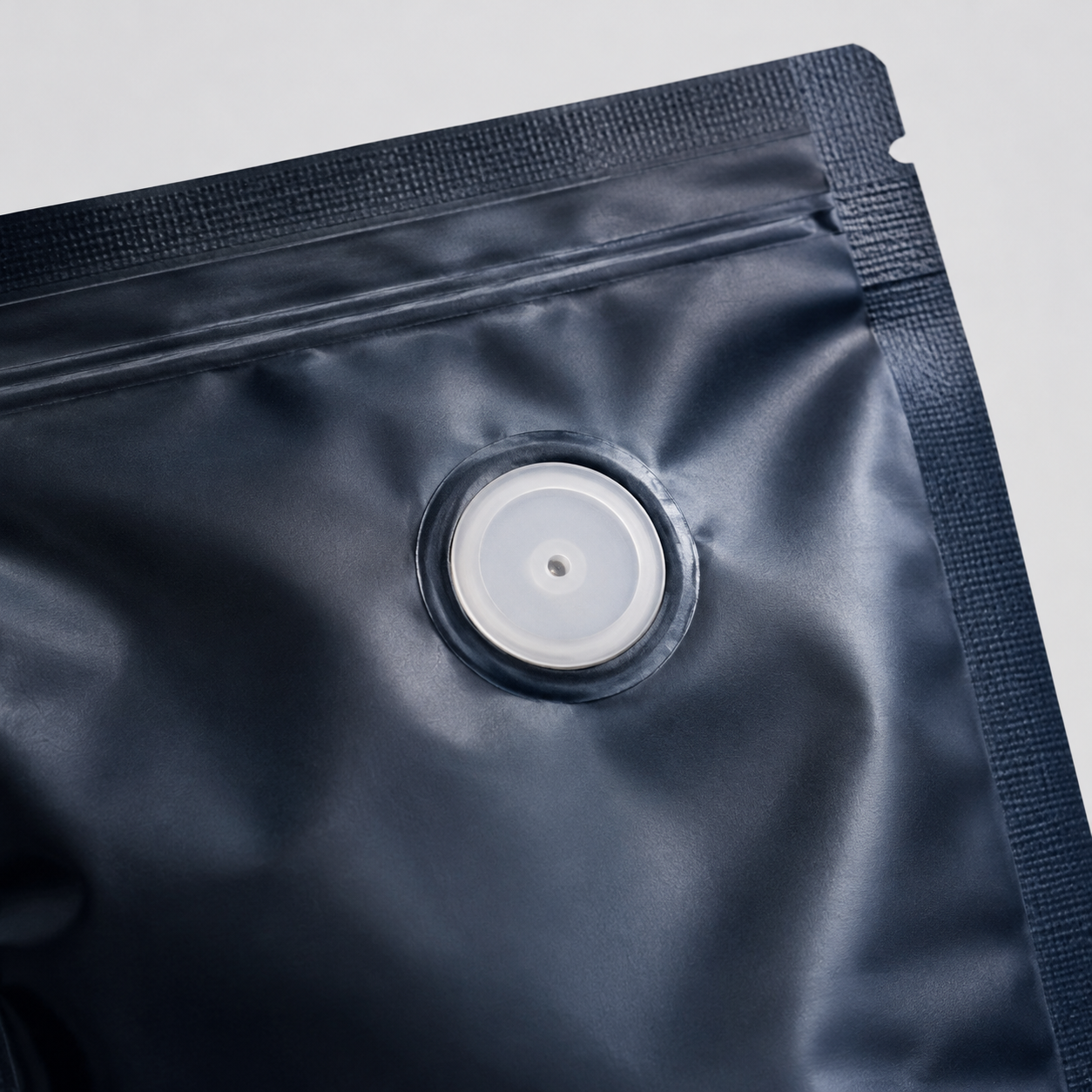
Specify the valve as one part of the finished pack, alongside the pouch geometry, laminate, seals and closure. A flat-bottom bag, side-gusset bag, stand-up pouch or another format can be designed with different component arrangements. The bag shape does not by itself determine whether a valve is needed.
At the RFQ stage, provide the coffee form, fill weight or volume, finished pouch dimensions, expected headspace, roast-to-fill schedule, filling equipment, gas-flushing method if used, storage and distribution conditions, quantity per SKU and destination. State whether the pack needs a zipper, tin tie, heat-sealed top or another closure. For the valve, ask for the proposed model, installation location, compatible film area, sealing or mounting method and any available component specification relevant to the application.
For a flat-bottom coffee pouch format, confirm how the valve location works with the front panel, top seal, filling clearance and shelf presentation. For a side-gusset coffee bag format, confirm how the gussets fold during filling and whether the selected location remains protected during handling. These are format decisions separate from the question of whether the coffee needs pressure management.
Also review the print route. QINPACK describes low-quantity digital printing and larger-run 10-color rotogravure as available production approaches, with the suitable method depending on quantity, artwork and project requirements. Confirm print setup, artwork files, color expectations and order quantity per SKU before comparing quotations.
How to Validate a Filled Coffee Pack in Four Steps
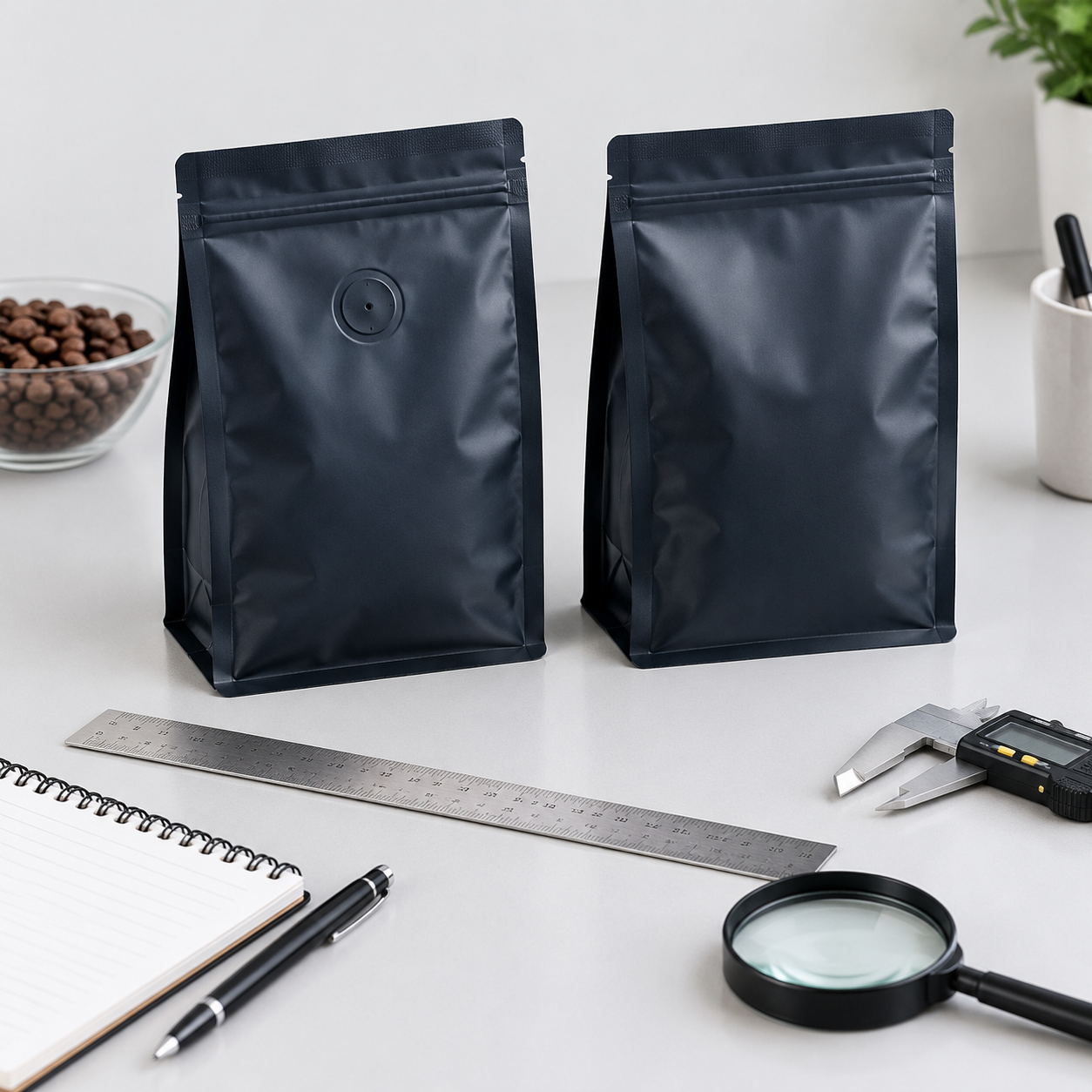
A small pilot can resolve the valve question more reliably than a generic rule. Keep the coffee, fill process and storage conditions representative of the intended SKU. Compare a valve-equipped pack with a control pack when the project allows it, and record the lot, roast information, filling date and pack construction.
- Define the application. Record whole bean or ground coffee, roast profile information available to the team, roast-to-fill and grind-to-fill timing, fill weight, pouch dimensions, headspace, closure, filling equipment, gas-flush sequence, intended storage conditions and distribution route. Set acceptance criteria for pack shape, seal integrity, appearance, aroma and product quality.
- Confirm the construction and component. Review the proposed coffee pouch barrier, sealant layer, total structure, valve model, valve position and closure. Ask for the relevant material and component information. For US sales, request the food-contact declarations or reports applicable to the exact construction and intended use. A general factory statement or a cleanroom classification is not, by itself, proof of finished-pack food-contact compliance, sterility or retort suitability.
- Run filled-pack checks. Fill packs using the intended method and inspect valve installation, top seals, zipper or other closure, visible distortion, contamination in the seal area and evidence of leakage or delamination. Use appropriate seal-strength, leak, visual and mechanical checks selected for the pack. Record the method and conditions instead of relying on an unexplained pass statement.
- Observe the product and pack over the planned interval. Compare valve and control packs through the relevant storage and handling conditions. Review pressure-related changes, pack stability, aroma and other quality attributes against the brand’s criteria. Use the results to approve, revise or reject the valve and pouch specification. A short pilot does not establish a universal shelf life, so extend the study when the commercial claim or distribution exposure requires it.
The result should be a documented project decision: valve required, valve not required under defined conditions, or more testing needed. Retain the final construction, artwork, valve location, filling settings and acceptance criteria with the SKU specification.
Frequently Asked Questions
These answers summarize the decision points that usually need to be resolved before a valve-equipped coffee pouch is ordered.
Conclusion: Specify the Valve as Part of the Whole Pack
A coffee degassing valve may be useful when roasted coffee continues to release enough gas after filling to affect pack stability or handling. The correct decision depends on the coffee form, roast-to-fill timing, headspace, filling method, barrier construction, seals, storage conditions and validation results.
For procurement, treat the valve as one component of a complete coffee packaging specification. Resolve the geometry, film, closure, print method and filled-pack test plan together, then approve the selected design for the defined application rather than assuming the same solution applies to every roast or SKU.
Discuss Your Packaging Specification With QINPACK
Send QINPACK your coffee form, fill weight or volume, target pouch dimensions, roast-to-fill or grind-to-fill schedule, filling method, gas-flushing details, storage and distribution conditions, valve and closure needs, quantity per SKU, artwork requirements and destination. The team can discuss a suitable pouch structure, valve installation, printing method and project-specific factory quotation.
When relevant, ask about available samples or a dieline consultation. Confirm sample contents, eligibility, freight charges, custom proof or prototype requirements, quotation response and production schedule with the team before placing an order.
FAQ
When does roasted coffee packaging need a degassing valve?
It may need one when coffee is filled while it is still expected to release enough carbon dioxide to affect internal pressure, pack shape, seal stress or handling. Confirm the need through a filled-pack comparison using the actual roast, timing, pouch and storage conditions.
Can ground coffee need a valve as well as whole bean coffee?
Yes. Ground coffee should not be excluded from consideration. The decision depends on grinding-to-fill timing, roast condition, headspace, packing method, gas flushing and observed pack behavior, not only whether the coffee is whole bean or ground.
Does a coffee valve replace oxygen-barrier film or gas flushing?
No. A valve manages outward gas release under suitable conditions. The laminate protects against gas and moisture transmission, while gas flushing can influence the atmosphere at filling. These functions are different and should be evaluated as parts of one packaging system.
How should roast-to-fill timing influence the valve decision?
Earlier filling may leave more residual gas in the coffee, increasing the reason to investigate a valve. A defined rest period may reduce the immediate pressure concern, but there is no universal degassing interval. Use the actual roast-to-fill schedule and confirm the result in a pilot.
What should a roaster validate before ordering valve-equipped pouches?
Validate the coffee condition, fill weight, pouch dimensions, headspace, barrier structure, valve model and location, closure, filling and flushing method, seal integrity, handling conditions and product-quality criteria. Request documentation relevant to the exact material construction and intended use, and retain the approved specification for each SKU.
Discuss Your Packaging Specification With QINPACK
Send your coffee form, fill weight or volume, target pouch dimensions, roast-to-fill schedule, filling conditions, storage conditions, valve and closure needs, quantity per SKU, artwork requirements and destination. The QINPACK team can discuss a suitable structure, closure, printing method and project-specific factory quote. Ask about available samples or a dieline consultation where relevant, and confirm sample contents, eligibility, freight charges, proof requirements and production schedule with the team.
Have Questions About This Packaging Specification?
Send your required barrier barrier properties, filling temperature, or bag dimensions to our Guangzhou prepress engineering team for a formal technical consultation.